1. Introduction
On October 02, 2026, Nagrik Adhikar Manch organized a Youth Capacity Building Program at the Youth Hostel, Ranital, Jabalpur. A total of 37 youth aged between 14 and 20 years enthusiastically participated in the program. The program was conducted by the organization’s Director, Mr. Shiv Kumar, and Coordinator, Ms. Pooja. The objective of the program was to develop the youth’s understanding of key issues through various activities and games, increase their participation, and encourage them to express their thoughts and expectations.
2. Key Activities
Activity 1: Understanding Participants’ Expectations
At the beginning of the program, an activity was organized to understand the participants’ expectations, thoughts regarding the session, and their purpose for joining the program. Under this activity, all the youth were given slips of paper on which they wrote what they expected to learn from the session and what they thought would happen during the program. Following this, a chart paper divided into various columns was put up on the wall, where all participants pasted their respective slips. The youth participated in this activity with great enthusiasm and expressed their expectations freely. Through this activity, there was an opportunity to understand the participants’ expectations and to foster their interest and participation in the program.
Activity 2: Introduction and Mutual Dialogue
In the second phase of the program, an engaging group activity was organized to promote mutual introduction and dialogue among the participants. This activity was conducted by Field Executive Ms. Gayatri. During the activity, participants were asked to form groups of five first, then groups of three, and finally pairs of two. Once paired up, both participants had to converse with each other to gather information about one another, including their names, what they do, their likes and dislikes, favorite things, and where they live. Afterward, each participant introduced their partner in front of the entire group. All the youth participated enthusiastically and completed it with great joy. This activity gave participants the opportunity to get to know each other, establish mutual communication, listen attentively, and speak in front of a group.
Activity 3: Mayor Game Activity and City Planning
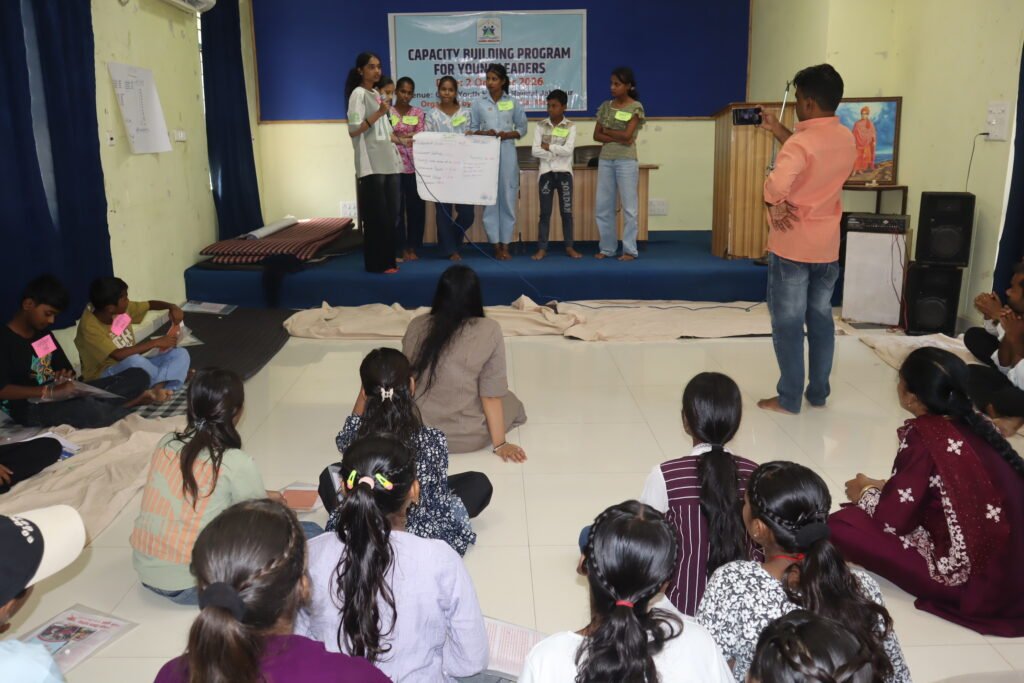
In the third phase of the program, an interesting and informative Mayor Game activity was organized to develop the youth’s leadership skills, decision-making abilities, collective participation, and proper management of resources. This activity was facilitated by Mr. Shubham. Under this activity, all the youth were divided into groups of five members each, similar to the earlier group activity. Each group had to select a Mayor from among themselves to lead the team and play a key role in preparing a development plan for the city. Subsequently, each group was given a hypothetical budget of ₹160 crore for the city’s development, out of which ₹100 crore was sanctioned, and they were challenged to arrange the remaining ₹60 crore on their own. The youth were encouraged to prepare a city development plan within this limited budget and utilize available resources based on priority.
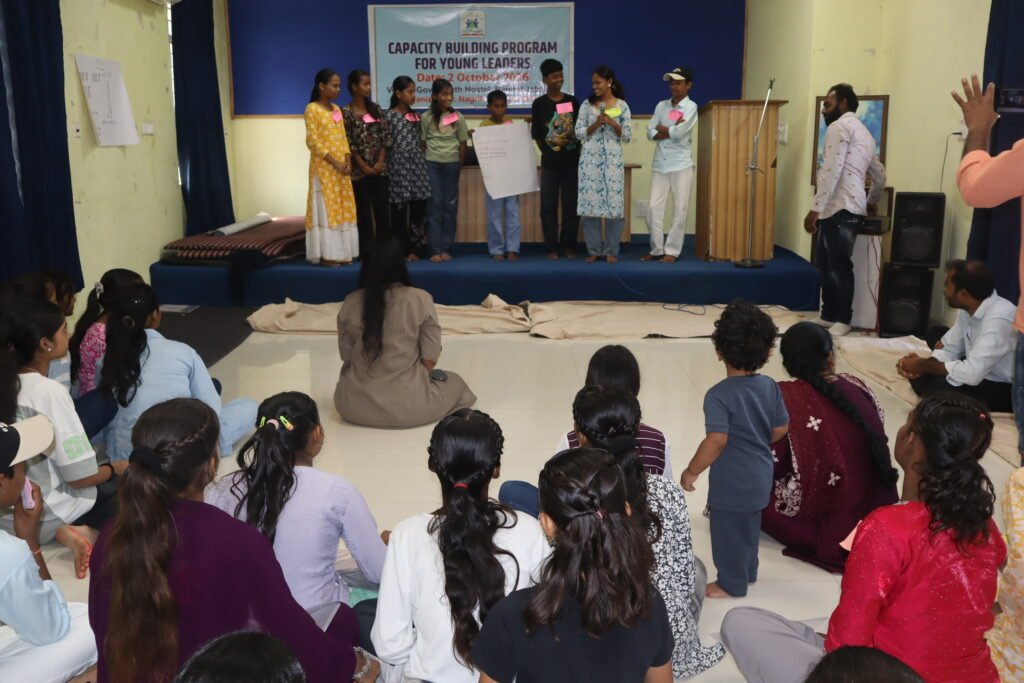
During the activity, all groups prepared their respective city development plans on chart paper. The youth included education, hospitals, libraries, sports facilities, girls’ safety, cleanliness, and other essential civic amenities in their priorities. Each group discussed which sectors required higher budget allocations for the holistic development of the city and how the available funds could be used effectively. In addition, the youth brainstormed various measures to arrange the extra ₹60 crore beyond the sanctioned budget. These options included collecting various types of taxes, imposing fines on rule violators, and requesting financial support from public representatives and senior leaders. Finally, all groups presented their city development plans through their chart papers and shared their suggested measures to bridge the budget deficit. Through this activity, the youth got a practical opportunity to understand the importance of leadership, teamwork, budget management, problem-solving, prioritization, and collective brainstorming.
3. Session – Understanding the Indian Constitution
In the next phase of the program, Mr. Shiv Kumar conducted a detailed and informative session on the Indian Constitution for the youth. The main objective of this session was to make the youth aware of the importance of the Constitution, its core principles, and the rights and duties of citizens. During the session, it was explained that the Indian Constitution is the foundation of the country’s governance, granting every citizen the right to live with equality, freedom, justice, and dignity. The youth were educated on the significance of Fundamental Rights, Fundamental Duties, and equal opportunities.
Furthermore, they were inspired to understand that the Constitution is not merely a legal document, but also a medium to establish equality, social justice, fraternity, and democratic values in society. In the session, the youth were encouraged to view the inequalities and social issues occurring around them through the lens of constitutional values and to remain aware of their rights. Through this session, an effort was made to develop constitutional understanding among the youth and inspire them to become aware, responsible, and active citizens.
4. Session – Fake News and Social Media Awareness
During the program, an important session on Fake News and Social Media Awareness was conducted by Mr. Shiv Kumar. In this session, the youth were informed about the proper and responsible use of social media. They were told that not every piece of information circulated on social media is true; therefore, it is essential to verify the authenticity of any news or message before believing it or sharing it with others. Additionally, discussions were held on identifying misleading news, avoiding rumors, and preventing the spread of misinformation through social media. The youth were encouraged to use digital platforms carefully and adopt responsible behavior on social media.
Outcomes:
- Increased understanding of how to identify fake news.
- Heightened awareness regarding the responsible use of social media.
- Developed an understanding of verifying information before sharing it.
5. Constitution Awareness Quiz
Following the various activities, an engaging and informative 15-question quiz related to the Indian Constitution was organized for the participants. In this activity, the youth were once again divided into separate groups, and participation was ensured through an inter-group quiz competition. The quiz featured questions on important topics such as the minimum voting age, the number of Fundamental Duties in the Constitution, the rights and duties of citizens, and our role as responsible citizens. Through this activity, participants were encouraged to learn basic facts about the Constitution, understand democratic processes, become aware of their rights and duties, and think and make decisions collectively as a group.
- Enhanced understanding of the Constitution and civic duties.
- Developed group participation and decision-making abilities.
6. Prize Distribution and Encouraging Participants
At the conclusion of the quiz, participants from all groups were encouraged with gifts such as Cadbury Celebrations packs. The objective of this initiative was to appreciate the participation of all the youth and boost their enthusiasm, self-confidence, and motivation to actively participate in future activities.
7. Your Opinion, Our Learning – Feedback Activity
After all the activities, sessions, and the quiz, the youth were given a feedback form to rate the various training sessions and activities, as well as to share their experiences and learnings through a few questions. The following questions were asked in the form:
- What did you learn from the training?
- What changes would you like to bring in your life or behavior?
- What did you like best about the training?
- How can the training be made even more fun and better?
The objective of this activity was to understand the opinions, experiences, and suggestions of the youth so as to make future training programs more engaging, participatory, and effective.
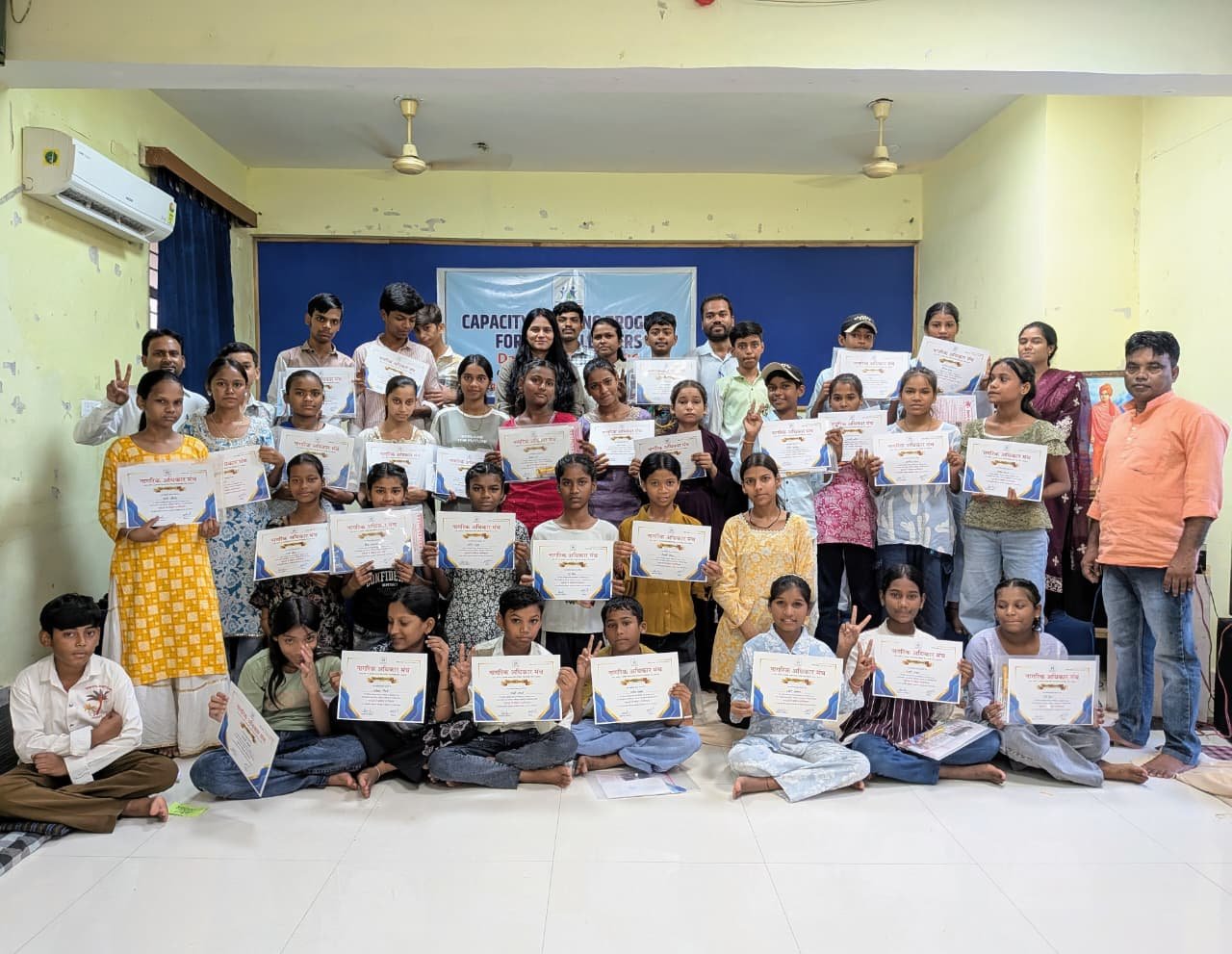
8. Moments of Honor and Achievement – Certificate Distribution and Group Photo
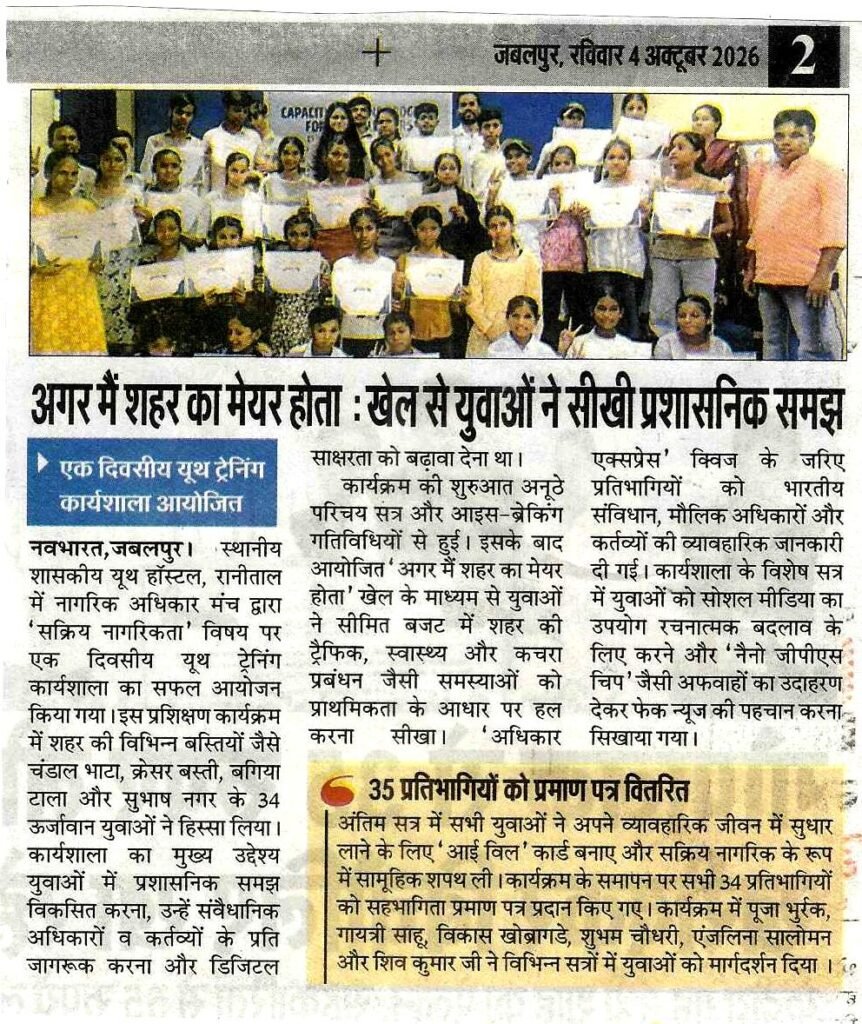
At the closing ceremony of the program, certificates were awarded to all participating youth for their active participation and attendance in the training. The certificate distribution process was carried out by all members of the organization — Mr. Shiv Kumar, Ms. Pooja Bhurrak, Mr. Vikas Kumar Khobragade, Ms. Gayatri Sahu, Mrs. Angeline Solomon, and Mr. Shubham Choudhary. All members took turns presenting certificates to the participants, encouraging them, and appreciating their participation and learning during the training. Great enthusiasm and happiness were visible among the youth upon receiving their certificates. Following this, a group photo session was organized with all participants and members of the organization to capture these memorable moments of the training.
9. Key Outcomes of the Training Program
- Increased awareness among the youth regarding the Constitution, rights, and duties.
- Developed the ability to understand local problems and issues in their area.
- Enhanced skills in communication, teamwork, and collective decision-making.
- Increased awareness regarding social media and fake news.
- Provided youth the opportunity to express their views and develop leadership capabilities.
- Gathered youth learnings, experiences, and suggestions through feedback.
10. Closing Remarks and Future Direction
The Youth Capacity Building Training Program organized by Nagrik Adhikar Manch has been a significant initiative toward developing awareness, participation, and leadership skills among the youth. Through various activities, interactive sessions, group games, and quizzes during the program, the youth got the opportunity to understand vital subjects such as the Indian Constitution, civic rights and duties, responsible citizenship, social media, and fake news. Additionally, the youth were encouraged to express their views, understand others’ perspectives, make collective decisions, and reflect on the problems and challenges of their communities.
The active participation of the youth during the training made it evident that such experiential and interactive programs provide young people with opportunities to learn, broaden their understanding, and become aware of community issues. Efforts were also made to understand the youth’s experiences, learnings, and suggestions through the feedback form, which will help make the organization’s future youth activities more effective.
Moving forward, the organization will strive to connect the learnings from this training with regular youth meetings and community discussions held in the settlements (bastis). Through these meetings, further dialogue can be held with the youth on the topics discussed during the training, their understanding and experiences can be shared, and they can be encouraged to identify problems in their areas and collectively brainstorm potential solutions. This will help continuously reinforce the learnings from the one-day training and sustain youth engagement in the community.
The organization believes that by providing youth with continuous opportunities for dialogue, guidance, and participation, they can be made more aware and responsible toward their community. In this direction, regular youth meetings in the settlements will play a vital role in advancing the understanding developed during the training and connecting young people with the process of positive social change at the local level.